Addressing Conflict with Empathy
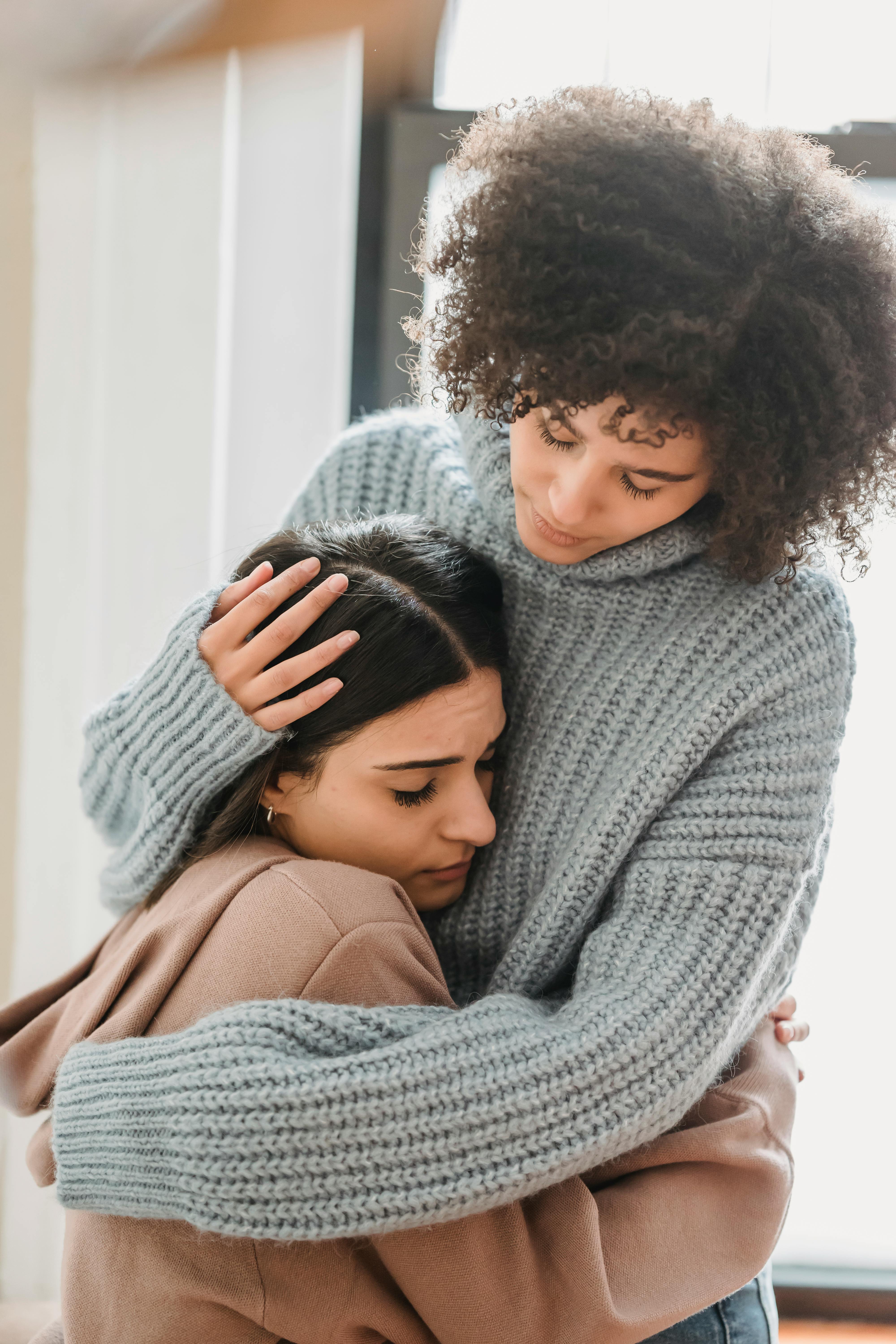
1. Definition of Empathy
Empathy refers to the ability to understand and/or share the emotional experiences of another person.
https://journals.sagepub.com/doi/full/10.1177/1754073919838609
2. Types of Empathy
Affective empathy involves sharing or mirroring another person’s emotional state.
https://journals.sagepub.com/doi/full/10.1177/1754073919838609Cognitive empathy involves understanding another person’s emotional state without necessarily sharing it.
https://journals.sagepub.com/doi/full/10.1177/1754073919838609Empathic concern (compassion) refers to feelings of sympathy and care that motivate helping behaviour.
https://journals.sagepub.com/doi/full/10.1177/1754073919838609Personal distress refers to discomfort or anxiety in response to another person’s suffering and may lead to avoidance rather than helping.
https://journals.sagepub.com/doi/full/10.1177/1754073919838609
(Also supported in intergroup research:)
https://pmc.ncbi.nlm.nih.gov/articles/PMC6343500/
3. Why Conflict Often Happens
Conflict frequently stems from misunderstandings, particularly when people fail to understand each other’s perspectives or intentions.
https://www.psychologytoday.com/ca/blog/empathy-and-relationships/201702/empathy-is-the-key-conflict-resolution-or-managementMisunderstandings escalate when avoided due to discomfort, allowing resentment to build.
https://www.psychologytoday.com/ca/blog/empathy-and-relationships/201702/empathy-is-the-key-conflict-resolution-or-managementEgocentrism drives misunderstanding because individuals interpret situations through their own biases and assumptions rather than considering the other person’s true interests.
https://www.psychologytoday.com/ca/blog/empathy-and-relationships/201702/empathy-is-the-key-conflict-resolution-or-management
4. Why Empathic Accuracy Matters in Interpersonal Conflict
Improves problem-solving by helping partners accurately understand what the other is thinking or feeling instead of reacting to assumptions.
https://pmc.ncbi.nlm.nih.gov/articles/PMC9646273/Leads to more constructive communication by reducing defensiveness and misinterpretation.
https://pmc.ncbi.nlm.nih.gov/articles/PMC9646273/Encourages accommodative behaviour, including compromise rather than escalation.
https://pmc.ncbi.nlm.nih.gov/articles/PMC9646273/Reduces destructive strategies such as blame, hostility, or withdrawal.
https://pmc.ncbi.nlm.nih.gov/articles/PMC9646273/Supports long-term relationship satisfaction by increasing emotional safety and trust.
https://pmc.ncbi.nlm.nih.gov/articles/PMC9646273/Helps partners manage emotionally threatening conversations more effectively.
https://pmc.ncbi.nlm.nih.gov/articles/PMC9646273/Empathy undermines biased conflict perceptions and improves accuracy in understanding disagreements.
https://www.psychologytoday.com/ca/blog/empathy-and-relationships/201702/empathy-is-the-key-conflict-resolution-or-management
5. Dialogue, Acceptance, and Managing Unresolvable Conflict
Most long-term relationship conflicts are perpetual rather than fully resolvable.
https://www.psychologytoday.com/ca/blog/empathy-and-relationships/201702/empathy-is-the-key-conflict-resolution-or-managementRelationship success depends more on the emotional tone of discussions than on eliminating disagreements.
https://www.psychologytoday.com/ca/blog/empathy-and-relationships/201702/empathy-is-the-key-conflict-resolution-or-managementDialogue prioritizes understanding and shared meaning rather than winning.
https://www.psychologytoday.com/ca/blog/empathy-and-relationships/201702/empathy-is-the-key-conflict-resolution-or-managementDebate reinforces polarization, while dialogue enlarges ideas and encourages deeper listening.
https://www.psychologytoday.com/ca/blog/empathy-and-relationships/201702/empathy-is-the-key-conflict-resolution-or-managementAcceptance, rather than mere tolerance, communicates respect and prevents relational gridlock.
https://www.psychologytoday.com/ca/blog/empathy-and-relationships/201702/empathy-is-the-key-conflict-resolution-or-management
6. How to Use Empathy Effectively in Interpersonal Conflict
Enter conversations with relationship-serving motivation rather than a desire to win.
https://pmc.ncbi.nlm.nih.gov/articles/PMC9646273/Focus on the other person’s interests instead of solely your own.
https://www.psychologytoday.com/ca/blog/empathy-and-relationships/201702/empathy-is-the-key-conflict-resolution-or-managementEngage in perspective-taking by placing yourself in the other person’s position.
https://www.psychologytoday.com/ca/blog/empathy-and-relationships/201702/empathy-is-the-key-conflict-resolution-or-managementAsk clarifying questions to check understanding.
https://pmc.ncbi.nlm.nih.gov/articles/PMC9646273/Reflect back what you hear to confirm accuracy.
https://pmc.ncbi.nlm.nih.gov/articles/PMC9646273/Balance attention between your own emotions and your partner’s internal experience.
https://pmc.ncbi.nlm.nih.gov/articles/PMC9646273/Stay present-focused, as empathic accuracy is influenced by situational motivation.
https://pmc.ncbi.nlm.nih.gov/articles/PMC9646273/
7. What to Avoid in Conflict
Over-helping without accurately understanding the other person first.
https://pmc.ncbi.nlm.nih.gov/articles/PMC9646273/Avoidance driven by relationship threat or discomfort.
https://pmc.ncbi.nlm.nih.gov/articles/PMC9646273/Assuming empathy is a stable personality trait rather than an intentional effort in the moment.
https://pmc.ncbi.nlm.nih.gov/articles/PMC9646273/
8. Reduced Motivation to Feel Empathy Toward Out-Groups
People are generally less motivated to feel empathy toward out-group members compared to in-group members.
https://journals.sagepub.com/doi/full/10.1177/1754073919838609Motivation predicts whether empathy is actually experienced.
https://journals.sagepub.com/doi/full/10.1177/1754073919838609Political ideology may influence willingness to empathize with opposing groups.
https://journals.sagepub.com/doi/full/10.1177/1754073919838609
9. Why Empathy Is Useful in Intergroup Conflict
Promotes cooperation between individuals and groups.
https://pmc.ncbi.nlm.nih.gov/articles/PMC6343500/Increases prosocial behaviour toward out-group members.
https://pmc.ncbi.nlm.nih.gov/articles/PMC6343500/Improves intergroup attitudes and reduces prejudice.
https://pmc.ncbi.nlm.nih.gov/articles/PMC6343500/Reduces aggressive attitudes toward out-groups.
https://pmc.ncbi.nlm.nih.gov/articles/PMC6343500/Encourages willingness to compromise.
https://pmc.ncbi.nlm.nih.gov/articles/PMC6343500/Increases support for reparative and humanitarian policies.
https://journals.sagepub.com/doi/full/10.1177/1754073919838609Supports forgiveness and reconciliation in post-conflict contexts.
https://journals.sagepub.com/doi/full/10.1177/1754073919838609Decreases zero-sum thinking between conflicting groups.
https://journals.sagepub.com/doi/full/10.1177/1754073919838609
10. How to Use Empathy in Intergroup Conflict
Engage in perspective-taking toward out-group members.
https://pmc.ncbi.nlm.nih.gov/articles/PMC6343500/Increase exposure to narratives describing out-group suffering.
https://pmc.ncbi.nlm.nih.gov/articles/PMC6343500/Write from another group’s perspective to enhance empathic understanding.
https://journals.sagepub.com/doi/full/10.1177/1754073919838609Participate in peace workshops that promote intergroup understanding.
https://journals.sagepub.com/doi/full/10.1177/1754073919838609Foster trust between groups to strengthen empathy-based interventions.
https://pmc.ncbi.nlm.nih.gov/articles/PMC6343500/Intentionally regulate intergroup empathy bias through emotional engagement.
https://pmc.ncbi.nlm.nih.gov/articles/PMC6343500/
11. Compassion and Mindfulness-Based Interventions
Loving-kindness or compassion meditation strengthens motivation to feel empathy.
https://journals.sagepub.com/doi/full/10.1177/1754073919838609Compassion training increases positive emotions toward suffering strangers.
https://journals.sagepub.com/doi/full/10.1177/1754073919838609Compassion training is associated with increased helping behaviour.
https://journals.sagepub.com/doi/full/10.1177/1754073919838609Mindfulness interventions may reduce aggression in interpersonal and intergroup contexts.
https://journals.sagepub.com/doi/full/10.1177/1754073919838609Meditation-based interventions may increase support for political compromise.
https://journals.sagepub.com/doi/full/10.1177/1754073919838609
12. Mechanisms Through Which Empathy Improves Intergroup Relations
Increasing motivation to feel compassion enhances intergroup empathy.
https://journals.sagepub.com/doi/full/10.1177/1754073919838609Cultivating other-regarding positive emotions reduces bias.
https://journals.sagepub.com/doi/full/10.1177/1754073919838609Training in emotion regulation strategies such as cognitive reappraisal improves intergroup attitudes.
https://journals.sagepub.com/doi/full/10.1177/1754073919838609Increasing perspective-taking strengthens cooperation and coordination.
https://journals.sagepub.com/doi/full/10.1177/1754073919838609Reducing perceptions of out-groups as homogeneous diminishes empathy bias.
https://journals.sagepub.com/doi/full/10.1177/1754073919838609
Dze L K’ant Friendship Centre Society
Website: http://www.dzelkant.com/
Phone: 250-845-2131
Email: aecd.coordinator@dzelkant.com
Address: 3383 11 St., Houston, BC V0J 1Z0
The adult mental health program is designed to provide counselling services for families experiencing trauma, intergenerational trauma, mental health issues, and addictions. The families that are being treated are also working on healthy relationships, overcoming domestic violence, anger management, parenting consultation, family reunification, and LBGTQ challenges. The counsellor works in conjunction with other programs at the Friendship Centre to ensure that all individuals and families receive counselling that will be done in accordance with culturally safe healing activities already offered and attended at the Centre.
Below is your list organized for couples counselling and anger-related relationship support, including costs, services, website, and contact information.
Couples Counselling and Anger-Related Support (Low-Cost / Free Options)
Dze L K’ant Friendship Centre Society
Provides counselling services for families and couples experiencing trauma and relationship challenges.
Supports healthy relationships, domestic violence recovery, anger management, parenting consultation, and family reunification.
Offers culturally safe counselling alongside healing programs at the Friendship Centre.
Rate: Low-cost (varies; contact for details).
Phone: 250-845-2131
Email: aecd.coordinator@dzelkant.com
Address: 3383 11 Street, Houston, BC V0J 1Z0
Website: http://www.dzelkant.com/
Canadian Mental Health Association – North and West Vancouver Branch
Provides low-barrier individual and group counselling for relationship challenges and anger management.
Supports couples experiencing stress, anxiety, depression, life transitions, and emotional regulation difficulties.
Offers evidence-based approaches such as CBT, DBT skills training, ACT, mindfulness, and narrative therapy.
Clients can self-refer for services.
Rate:
$25 per hour with a supervised practicum student.
$50 per hour with a Registered Clinical Counsellor (RCC).
Up to 8 sessions available, with referrals to additional community services if needed.
Typical waitlist is approximately 10 weeks.
Phone: 604-724-4749
Email: info@cmhanorthshore.ca
Address: 300-1835 Lonsdale Avenue, North Vancouver, BC V7M 2J8
Here is your information clearly organized with bullet points, costs, services, and contact details.
Couples Counselling and Anger-Related Support (Free / Low-Cost Options in BC)
Prince George Native Friendship Centre
Provides free counselling services for all ages.
Offers support for individuals, couples, and families.
Provides access to psychological and psychiatric assessments.
Offers weekly drop-in crisis counselling.
Integrates cultural resources and Indigenous healing approaches.
Referrals accepted by phone, email, fax, or walk-in.
Cost: Free.
Phone: 250-564-4324
Email: nhc@pgnfc.com
Address: 1600 3rd Avenue, Prince George, BC V2L 3G6
Website: http://www.pgnfc.com
Profile Page: https://caibc.ca/cai-counselling-profiles/prince-george-native-friendship-centre/
Pacific Centre Family Services Association
Provides low-cost and free community counselling.
Offers trauma-informed counselling for individuals, couples, and families.
Supports anger management, relationship conflict, trauma, and mental health challenges.
Provides services through Telehealth (phone/video) and limited in-person sessions.
Uses a strength-based, client-centered approach.
Cost: Free or low-cost (contact for sliding scale details).
Phone: 250-478-8357
Toll-Free: 1-866-478-8357
Intake & Referrals: 250-940-4373
Email: pacificcentre@pcfsa.org
Address: #200 – 324 Goldstream Avenue, Colwood, BC
Family Services of the North Shore
Provides no-fee and low-fee counselling on a sliding scale.
Offers individual, couple, family, and group counselling.
Services available by phone, online, and in-person.
Offers up to 6 free sessions for individuals impacted by COVID-19.
Supports anxiety, depression, grief, stress, relationship conflict, and anger.
Available to residents of the North Shore (District and City of North Vancouver and West Vancouver).
Cost: Sliding scale; some free sessions available.
COVID Line: 604-877-4381
Intake Line: 604-988-5281 ext. 226
Email: intake@familyservices.bc.ca
Address: 1111 Lonsdale Avenue #203, North Vancouver, BC V7M 2H4
Website: https://familyservices.bc.ca
Profile Page: https://caibc.ca/cai-counselling-profiles/family-services-of-the-north-shore/
Couples Counselling and Anger-Related Support (Free / Low-Cost Options)
S.U.C.C.E.S.S.
Provides individual, couple, and family therapy.
Supports marital conflict, trauma, grief, abuse, identity issues, parenting, and relationship challenges.
Offers counselling in English, Cantonese, Mandarin, Korean, and Farsi.
Services delivered by Registered Clinical Counsellors and Social Workers.
Art therapy and play therapy available upon request.
Cost:
Funded services are free.
Unfunded services available on a sliding scale based on income.
Phone: 604-468-7267
Chinese & English Services: 604-408-7266
Korean Services: 604-468-6005 ext. 2
Farsi Services: 604-468-6100 ext. 1
Email: ryan.drew@success.bc.ca
Address: 28 West Pender Street, Vancouver, BC V6B 1R6
Website: https://successbc.ca/counselling-crisis-support/services/counselling/
OneSky Community Resources
Provides virtual counselling for individuals, couples, and families.
Supports anger, trauma, grief, abuse, parenting issues, life transitions, and addiction.
Sessions held by phone or video (Zoom).
Counsellors are Master’s-level clinicians or supervised interns.
No referral required.
Cost: Free (grant-funded for eligible Southern Okanagan residents).
Phone: 250-487-3359
Email: info@oneskycommunity.com
Address: 330 Ellis Street, Penticton, BC V2A 4L7
Website: https://oneskycommunity.com
Profile Page: https://caibc.ca/cai-counselling-profiles/onesky-community-resources/
Métis Community Services Society of BC
Provides culturally safe counselling and wraparound services.
Supports mental health, substance use, trauma, and family conflict.
Integrates CBT, DBT, motivational therapy, and trauma-informed care.
Incorporates Indigenous healing approaches such as Two-Eyed Seeing and Wellbriety programs.
Offers group wellness workshops and cultural teachings.
Cost: Low-barrier access (free or low-cost depending on eligibility).
Phone: 250-868-0351
Fax: 250-868-0359
Email: reception@mcsbc.org
Address: 147 Park Road, Kelowna, BC V1Y 3E3
Website: https://mcsbc.org
Additional Resource Listings
Community Counselling Grant Programs (various free / low-cost services across BC).
Website: https://caibc.ca/grants/community-counselling-grants/
Adler Counselling Clinic
Provides low-cost individual counselling (~$60) and couples counselling (~$85).
Delivered by graduate student interns supervised by Registered Counsellors.
Sliding scale services available.
Phone: 604-742-1818
Perfect! Here’s a fully organized, categorized list of low-cost and free counselling resources in BC that support anger management, couples, and general counselling, including costs, contact information, and websites.
Low-Cost or Sliding Scale Counselling for Anger Management & Couples
Adler Centre – Counselling Clinic
Services: Individual counselling, couples counselling, anger management support.
Cost: $60 per individual session, $85 per couple session, sliding scale available.
Counsellors: Graduate student interns supervised by registered counsellors.
Phone: 604-742-1818
Ciel Community Counselling
Services: Individual counselling, couples counselling, anger management support.
Cost: $45 per individual session, $70 per couple session.
Counsellors: Master’s-level counselling student interns supervised by registered counsellors.
Dragonstone Counselling
Services: Individual counselling, couples therapy, anger management support.
Cost: Sliding scale available.
Counsellors: Supervised counselling student interns.
Phone: 604-738-7557
Free Counselling & Trauma-Informed Supports
Family Services of Greater Vancouver
Services: Individual, couples, and family counselling; trauma and anger management support.
Cost: No-cost counselling; may require referral from a social worker.
Phone: 604-874-2938 ext. 4141
Website: https://www.fsgv.ca/find-the-support-you-need/counselling/
S.U.C.C.E.S.S.
Services: Individual, couples, and family therapy; anger management, marital conflict, trauma, and grief.
Cost: Funded services are free; unfunded services sliding scale based on household income.
Phone: 604-468-7267
Chinese & English: 604-408-7266
Korean: 604-468-6005 ext. 2
Farsi: 604-468-6100 ext. 1
Website: https://successbc.ca/counselling-crisis-support/services/counselling/
OneSky Community Resources
Services: Individual, couples, family counselling; anger management; mental health support; substance use support.
Cost: Free (grant-funded for Southern Okanagan residents).
Virtual sessions by phone or Zoom; no referral required.
Phone: 250-487-3359
Email: info@oneskycommunity.com
Website: https://oneskycommunity.com
Profile: https://caibc.ca/cai-counselling-profiles/onesky-community-resources/
Prince George Native Friendship Centre
Services: Individual, couples, and family counselling; crisis support; anger management; psychological assessments.
Cost: Free.
Phone: 250-564-4324
Email: nhc@pgnfc.com
Address: 1600 3rd Avenue, Prince George, BC V2L 3G6
Website: http://www.pgnfc.com
Profile: https://caibc.ca/cai-counselling-profiles/prince-george-native-friendship-centre/
Specialized Counselling for Specific Groups
BC Society for Male Survivors of Sexual Abuse
Services: Individual & group counselling for male survivors; anger management support for trauma survivors.
Cost: $100 per individual session (RCC); $40 per week for group; $45/hr with practicum students; funding help available.
Phone: 604-682-6482
Website: https://bc-malesurvivors.com/for-survivors/funding-your-therapy/
Catherine White Holman Wellness Centre
Services: Drop-in counselling for trans and gender-diverse people; anger management and relationship support.
Cost: Call to confirm availability; generally free.
Phone: 604-442-4352
Website: https://cwhwc.com/services/
Health Initiative for Men (HIM)
Services: Brief counselling (8 sessions) for gay, bisexual, and other men who have sex with men; anger management, mental health, relationship support.
Cost: Donation-based, equivalent to hourly wage.
Phone: 604-488-1001 ext. 230
Website: https://checkhimout.ca/programs-and-services/mental-health/counselling/
Métis Community Services Society of BC
Services: Low-barrier culturally safe counselling; anger management; family and trauma support; incorporates Indigenous healing practices.
Cost: Free or low-cost depending on eligibility.
Phone: 250-868-0351
Email: reception@mcsbc.org
Website: https://mcsbc.org
Low-Cost or Sliding Scale Counselling
Moving Forward Family Services
Services: Short-term individual, couples, and family counselling via telephone and online; anger management support available.
Cost: Free or low-cost.
Phone: 778-321-3054
Email: counsellor@movingforwardfamilyservices.com
Website: https://www.mffs.ca
Oak Counselling
Services: Individual, couples, and family counselling; anger management and relationship support.
Cost: Reduced fee based on monthly income.
Counsellors: Volunteer registered counsellors.
Phone: 604-266-5611
Website: http://oakcounselling.org